> ## Documentation Index
> Fetch the complete documentation index at: /llms.txt
> Use this file to discover all available pages before exploring further.
# Idempotency
> Prevent duplicate transactions using idempotency keys.
Idempotency ensures that the same API call doesn't create duplicates, even when retried due to network issues.
## Why it matters
Without idempotency, a connection timeout or retry can cause the **same payment to be processed twice** — resulting in double charges for your customer.
## How it works
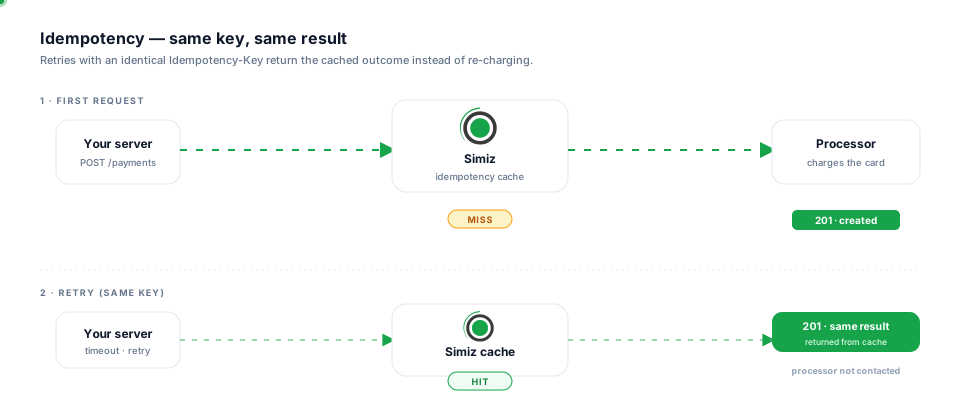 For each payment, generate a UUID v4 as your idempotency key.
Add the `Idempotency-Key` header to your payment creation request:
```bash
curl -X POST https://api.simiz.io/v1/transactions \
-H "Authorization: Bearer sk_test_xxx" \
-H "Content-Type: application/json" \
-H "Idempotency-Key: a1b2c3d4-e5f6-7890-abcd-ef1234567890" \
-d '{
"amount": 5000,
"currency": "XAF",
"payment_method": "ORANGE_MONEY",
"payer": {
"phone": "237690000000",
"name": "John Doe"
},
"description": "Order #12345"
}'
```
* **First request** → Creates the transaction normally
* **Subsequent requests with the same key** → Returns the existing transaction without creating a new one
## Key format
| Property | Value |
| -------------- | ----------------------------------------------------------- |
| **Format** | Any string up to 255 characters (UUID v4 recommended) |
| **Uniqueness** | One key per operation — reuse the same key only for retries |
## Best practices
UUID v4 guarantees sufficient uniqueness. Avoid time-based or sequential keys.
Create a new key for each new operation. Reuse the same key only for retries of the same request.
Save the idempotency key alongside the transaction in your database for audit trails.
Using the same key for different operations may return unexpected results.
## Common errors
| Scenario | Result |
| ------------------------------ | -------------------------------------------------- |
| Same key, same parameters | Returns the original response |
| Same key, different parameters | Returns the original response (new params ignored) |
| Key too long (>255 chars) | `400 Bad Request` |
For each payment, generate a UUID v4 as your idempotency key.
Add the `Idempotency-Key` header to your payment creation request:
```bash
curl -X POST https://api.simiz.io/v1/transactions \
-H "Authorization: Bearer sk_test_xxx" \
-H "Content-Type: application/json" \
-H "Idempotency-Key: a1b2c3d4-e5f6-7890-abcd-ef1234567890" \
-d '{
"amount": 5000,
"currency": "XAF",
"payment_method": "ORANGE_MONEY",
"payer": {
"phone": "237690000000",
"name": "John Doe"
},
"description": "Order #12345"
}'
```
* **First request** → Creates the transaction normally
* **Subsequent requests with the same key** → Returns the existing transaction without creating a new one
## Key format
| Property | Value |
| -------------- | ----------------------------------------------------------- |
| **Format** | Any string up to 255 characters (UUID v4 recommended) |
| **Uniqueness** | One key per operation — reuse the same key only for retries |
## Best practices
UUID v4 guarantees sufficient uniqueness. Avoid time-based or sequential keys.
Create a new key for each new operation. Reuse the same key only for retries of the same request.
Save the idempotency key alongside the transaction in your database for audit trails.
Using the same key for different operations may return unexpected results.
## Common errors
| Scenario | Result |
| ------------------------------ | -------------------------------------------------- |
| Same key, same parameters | Returns the original response |
| Same key, different parameters | Returns the original response (new params ignored) |
| Key too long (>255 chars) | `400 Bad Request` |